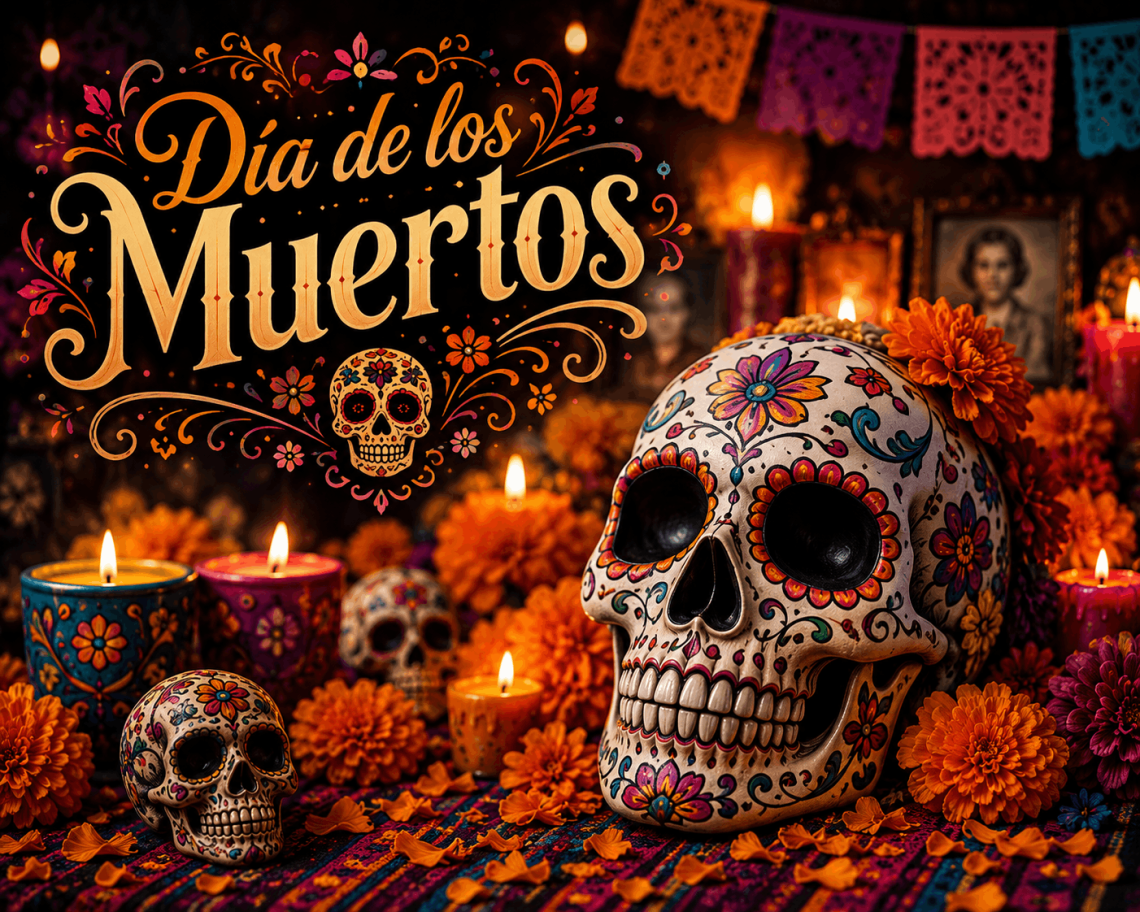
Dia de los Muertos 2025: A Powerful Guide to Meaningful Traditions
Every year, as October fades and November arrives, something shifts. The air feels different heavier with memory, but lighter with celebration. If you’ve ever stood before a glowing ofrenda covered in marigolds, photographs, and candles, you already know that feeling. And if you haven’t yet experienced dia de los muertos 2025, this is your year.
This guide is for everyone those who grew up honoring this tradition, those who married into it, those who learned about it in a documentary at 2 a.m., and those who simply feel called to it. Let’s talk about what this holiday truly means, how it’s celebrated, and how you can participate in a way that is respectful, intentional, and genuinely moving.
What Is Dia de los Muertos? Understanding the Heart of the Holiday
Dia de los Muertos . translated as “Day of the Dead” . is a Mexican holiday celebrated on November 1st and 2nd each year. But calling it just a “holiday” undersells it. It’s a spiritual reunion. A colorful, joyful, tearful gathering point between the living and the dead.
The tradition holds that on these two days, the boundary between the living world and the afterlife becomes thin enough for the souls of the departed to return home. Not to haunt . but to visit. To share a meal. To hear their favorite music one more time. To feel remembered and loved.
Dia de los muertos 2025 falls on Saturday, November 1st and Sunday, November 2nd . a weekend, which means more families will be able to gather, more communities will host public celebrations, and more people across the world will have the chance to witness or participate in this tradition.
The holiday has its roots in both ancient Aztec rituals honoring the dead and the Catholic observances of All Saints’ Day and All Souls’ Day. Over centuries, these practices wove together into something uniquely Mexican . rich with symbolism, art, food, and deep familial love.
The Ofrenda: The Sacred Centerpiece of Dia de los Muertos 2025
If there’s one tradition that anchors dia de los muertos, it’s the ofrenda the altar built for the returning souls.
Building an ofrenda is one of the most personal things a family can do. It’s not decorating. It’s not craft. It’s an act of love and grief and memory all at once.
What Goes on an Ofrenda?
Photographs of the deceased This is where it starts. You place photos of those you’ve lost at the center of the altar. Grandparents. Parents. Children. Friends taken too soon. Seeing their faces there, surrounded by candles and flowers, does something to you that’s hard to put into words.
Cempasúchil (marigolds) These bright orange and yellow flowers are believed to guide the souls home with their scent. Their petals are often scattered in a path from the front door to the ofrenda a flower-lit runway for the returning dead.
Candles Light guides the way. Each candle represents a soul, and the more candles you light, the more welcome the spirits feel.
Food and drink You set out your loved one’s favorite meals, snacks, and drinks. A cold bottle of beer for Tío Roberto. A plate of tamales for Abuela. A cup of atole for the little ones. The idea is that the spirits consume the essence of the food, not the food itself . so don’t be surprised when it looks untouched in the morning.
Water Always water. The souls travel a long way, and they’re thirsty.
Salt For purification and preservation of the soul’s journey.
Copal incense The smoke carries prayers upward and helps cleanse the space.
Papel picado Those beautiful, delicate cut-paper banners fluttering above the altar represent the wind and the fragility of life. They’re also just gorgeous.
Personal items A loved one’s reading glasses, their favorite book, a tool they always had in their hands, a lipstick shade they wore every day. These small objects carry enormous weight.
For dia de los muertos 2025, many families are also incorporating digital photo frames showing slideshows of their loved ones, and some are setting up video tributes at the ofrenda. Tradition grows and adapts and that’s okay.
November 1st vs. November 2nd: What’s the Difference?
People sometimes think dia de los muertos is just one night. It’s actually two and each has its own focus.
November 1st Día de los Inocentes (Day of the Innocents)
This day honors the souls of children who have passed los angelitos, the little angels. Ofrendas built for children are decorated with toys, candy, and small treats. There’s a particular tenderness to this day that parents who have lost children describe as both heartbreaking and healing.
November 2nd Día de los Difuntos (Day of the Dead)
This is the main event when adult souls return. Families gather at cemeteries to clean and decorate graves, share food, play music, and spend time with their ancestors. If you’ve ever seen photos of Mexican cemeteries lit up with thousands of candles and marigolds, that’s this night.
In dia de los muertos 2025, cemetery vigils are expected to see strong attendance across Mexico particularly in Oaxaca, Michoacán, and Mexico City . as families reconnect after years of pandemic-related restrictions.
Sugar Skulls, Face Paint, and the Catrina: The Visual Language of the Holiday
One thing that immediately strikes people when they first encounter dia de los muertos is how beautiful it all is. Death, in this tradition, isn’t ugly or shameful. It’s painted in bright colors and adorned with flowers.
The Sugar Skull (Calavera de Azúcar)
Sugar skulls are edible or decorative skulls made from sugar, decorated with bright icing and foil. They’re placed on ofrendas or given as gifts. The skull motif doesn’t signal morbidity it signals that death is part of life, not the end of it.
For dia de los muertos 2025, local bakeries and community workshops in cities across the United States and Mexico are already planning sugar skull decorating events in October check your local cultural centers for dates.
La Catrina
La Catrina the elegantly dressed female skeleton is perhaps the most recognizable symbol of dia de los muertos today. Originally a satirical illustration by artist José Guadalupe Posada in the early 1900s, she was later painted into a famous mural by Diego Rivera wearing a dress and elaborate hat.
Today, she represents the universality of death the idea that no matter how rich or powerful we are, we all end up the same. She wears her bones with dignity and style.
Face Paint and Calavera Makeup
Painting your face as a skull for dia de los muertos is a way of participating in and honoring the tradition not a costume, but a transformation. It’s worth noting that non-Mexican participants should approach this with respect and cultural awareness, ideally learning about the meaning behind the imagery before adopting it.
Food Traditions for Dia de los Muertos 2025
No reunion is complete without food. Dia de los muertos is no exception it is, in many ways, a festival built around feeding both the living and the dead.
Pan de Muerto (Bread of the Dead)
This sweet, fluffy bread is one of the most beloved traditions of the holiday. Baked in the shape of a round loaf with dough “bones” arranged on top and a small dough skull at the center, pan de muerto is flavored with orange zest and anise, then dusted with sugar. It’s placed on the ofrenda and also eaten by the family.
For dia de los muertos 2025, bakeries across Mexico and in Mexican-American communities in California, Texas, Illinois, and New York are expected to sell out quickly so order or buy early if you want to try it.
Mole
Rich, complex mole sauce made from chiles, chocolate, and sometimes more than 30 ingredients is a traditional dish served at dia de los muertos gatherings. Each region of Mexico has its own variation, and every family has their abuela’s secret recipe.
Atole
This warm drink made from masa (corn dough), water, and piloncillo (unrefined sugar) is a comfort food served throughout the holiday. It’s thick, sweet, and warming perfect for late November nights in a cemetery.
Tamales
Tamales are labor-intensive, which is exactly why they’re made for celebrations. Families gather to make tamales together a process called a tamalada and the act of making them is as meaningful as eating them.
How Communities Are Celebrating Dia de los Muertos 2025
One of the most beautiful things about dia de los muertos is how it has grown beyond Mexico’s borders. Today, cities across the United States, Latin America, and even parts of Europe hold public celebrations altars in community centers, candlelit cemetery walks, marigold festivals, and art exhibitions.
In Mexico
The most famous celebrations happen in:
Oaxaca Cemetery vigils in places like Xoxocotlán are hauntingly beautiful. Families spend the whole night at gravesites, sharing food, playing music, and talking to their loved ones.
Pátzcuaro, Michoacán The island of Janitzio becomes a sea of candlelight on the night of November 1st. Indigenous Purépecha traditions blend with Spanish Catholic influence here in ways that feel ancient and alive at once.
Mexico City The capital hosts a massive public parade inspired by the opening scene of the James Bond film Spectre, which inadvertently sparked a new tradition.
In the United States
Los Angeles, San Antonio, Chicago, and San Francisco all host large-scale dia de los muertos 2025 events. Many include community ofrenda installations where families can add photos of their own loved ones creating a collective altar that grows throughout the season.
Check local listings for museum exhibitions, cemetery walking tours, and art festivals happening near you this fall.
How to Honor Dia de los Muertos 2025 Respectfully If You’re Not Mexican
This is a question worth sitting with. Dia de los muertos is not Halloween. It’s not a costume opportunity. It’s a sacred cultural and spiritual practice that deserves respect.
That said, the tradition has always included elements of universality the grief of losing someone, the desire to stay connected, the impulse to celebrate a life rather than just mourn a death. These feelings aren’t exclusively Mexican. They’re human.
Ways to participate meaningfully:
- Build your own remembrance space. You don’t have to call it an ofrenda if that feels presumptuous. But setting up a table with photos of people you’ve lost, their favorite items, and candles and spending time with that space is a genuinely healing practice.
- Attend public community events hosted by Mexican or Mexican-American organizations. Go as a guest, not as a performer.
- Learn before you do. Read books, watch documentaries, talk to people from the culture. The more you understand, the more meaningful your participation becomes.
- Support Mexican-owned businesses when buying marigolds, sugar skulls, or other holiday items.
Why Dia de los Muertos 2025 Feels More Meaningful Than Ever
Over the past few years, so many of us have lost people we love. Grandparents. Parents. Friends. Colleagues. People taken by illness, by accident, by time. And many of us are still carrying that grief quietly, without quite knowing what to do with it.
Dia de los muertos offers something that modern Western culture often doesn’t: a structured, communal way to grieve and celebrate at the same time. You’re not expected to have “moved on.” You’re expected to sit down, put out a plate of their favorite food, light a candle, and say their name out loud.
There is real power in that.
Dia de los muertos 2025 arrives at a moment when people are hungry for ritual, for community, and for ways to hold grief with some measure of grace. This holiday . with its marigolds and music and midnight candles . offers exactly that.
Quick Guide: Getting Ready for Dia de los Muertos 2025
Here’s a simple checklist if you want to participate this year:
Gather your materials:
- Photographs of loved ones who have passed
- Orange marigolds or marigold petals
- Candles (white or colored)
- Copal incense or another cleansing fragrance
- Your loved one’s favorite food or drink
- A glass of water
- Personal items that belonged to them
- Papel picado (available at most Mexican grocery stores)
Set up your space a table, a shelf, a windowsill anywhere you can dedicate to this remembrance.
Spend time there. Talk to the people in the photos. Tell them what’s happened since they left. What you miss. What you’re proud of. What you wish you’d said.
That’s dia de los muertos. Not elaborate. Not expensive. Just love, expressed across a barrier we can’t fully see.